
Loading...
Serving San Jacinto, CA and surrounding areas. (951) 574-0258
Menu
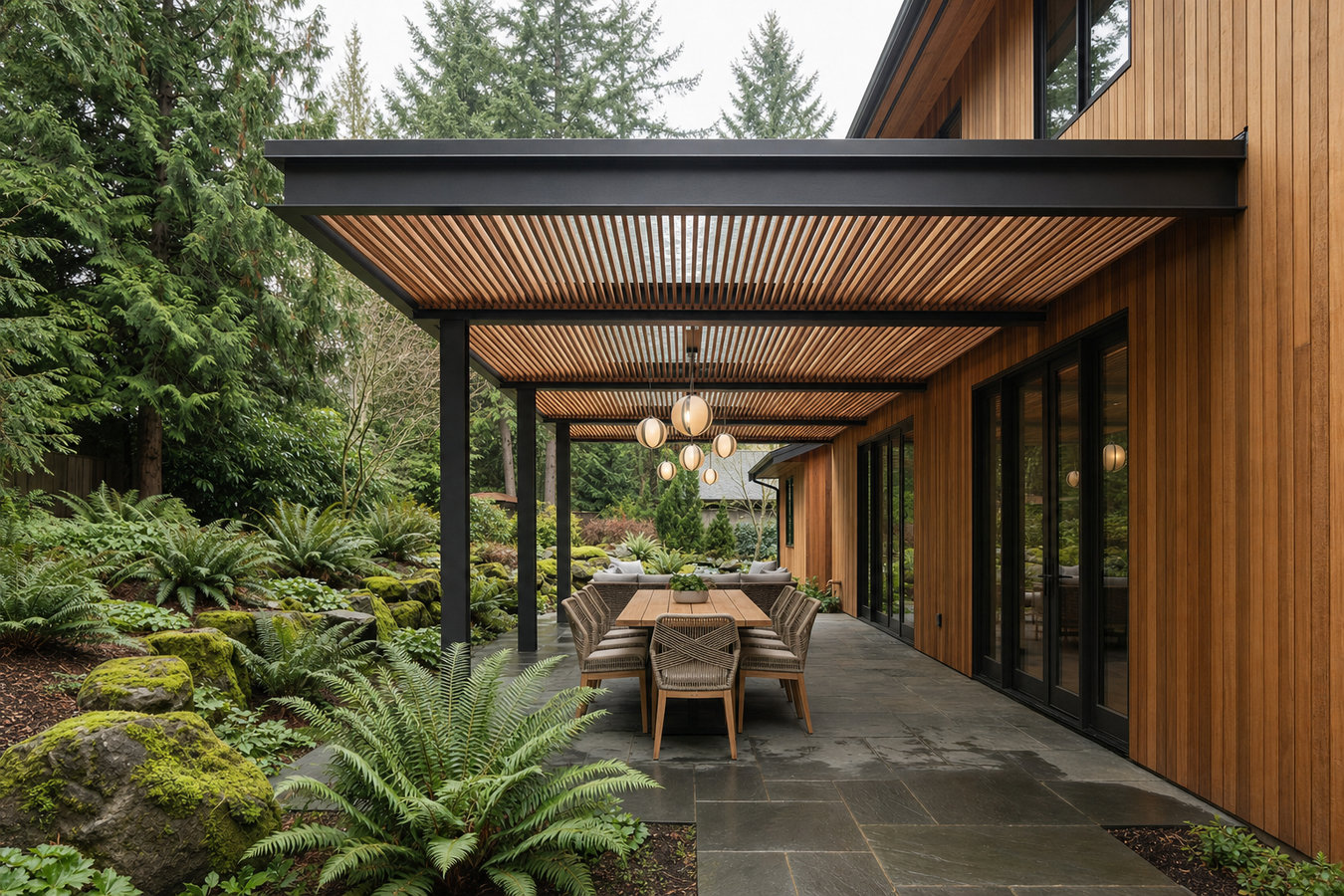
San Jacinto summers push past 105 degrees. A properly built patio cover turns a backyard you avoid into a space you actually want to be in - morning, afternoon, or evening, even in the hottest months.
Covered decks and patio covers in San Jacinto give homeowners a permanent shaded space outside, built to handle local heat and wind, most standard projects take two to five days of construction once the permit is approved.
In San Jacinto's climate, a covered patio is not a luxury addition - it is what makes your backyard usable from May through September. The right structure keeps the space ten to fifteen degrees cooler than an open patio and protects furniture, grills, and cushions from the UV exposure that degrades everything left in direct sun. Homeowners who invest in a patio cover consistently say they spend more time outside in the first summer than they had in years prior.
A covered patio pairs naturally with a screened-in porch enclosure for homeowners who want both shade and bug protection. If you prefer an open-beam overhead structure instead, our pergola installation service may be the right fit.
If you step outside between late spring and early fall and immediately retreat because of the heat, your outdoor space is not working for you. San Jacinto temperatures regularly exceed 105 degrees, making an unshaded patio genuinely uncomfortable for months. A covered structure can turn that same space into somewhere you actually want to be.
Intense UV exposure in the inland valley breaks down outdoor materials faster than in coastal areas. If your cushions are cracking and bleaching, or your patio furniture looks years older than it is, that is a sign your outdoor space is taking a beating from direct sun. A covered structure protects everything under it.
If your current patio cover leans, has roof panels that rattle in the wind, or shows gaps where it connects to your house, those are signs the structure has been compromised. This can come from wind events, soil movement under the footings, or age. A structure in that condition is a safety concern that warrants a professional assessment.
San Jacinto gets cool, windy winters and occasional rain. If you want to sit outside on a January evening or use your grill when it is drizzling, a solid-roof covered structure makes that possible. Many homeowners do not realize how much more they would use their outdoor space until they have a cover that makes it comfortable year-round.
We build both attached and freestanding patio covers across the San Jacinto Valley. An attached cover connects to your house - sharing the wall or roofline for support - and is the more cost-effective option when you are covering an existing slab. A freestanding cover stands on its own posts and can go anywhere in your yard, which gives you more flexibility but requires its own full structural support. For homeowners who want to add screens to a covered space, we can combine a screened-in porch enclosure with the cover as one integrated project.
Roof style affects how the finished space feels. A solid panel roof blocks all direct sun and handles light rain - the right choice for west-facing patios that get brutal afternoon exposure. A lattice or louvered design filters light and keeps the space feeling open. We also build pergola installations for homeowners who want the structural definition of an overhead framework without a fully enclosed roof panel. Material choices - wood, aluminum, or vinyl - affect both maintenance requirements and how the cover looks against your home.
Connects directly to your house using the wall or roofline for partial support. Lower cost than freestanding and the most common choice for covering an existing concrete slab.
Stands on its own posts and can be placed anywhere in your yard - over a pool, hot tub, or detached slab. More flexible in placement but requires full structural support from its own footings.
Blocks all direct sun and light rain. Best for homeowners who want maximum shade and protection, especially on west-facing patios that get direct afternoon sun.
Filters light and lets some air through. Good for homeowners who want partial shade and a more open, airy feel rather than a fully enclosed overhead structure.
San Jacinto sits in the inland San Jacinto Valley where summer heat waves regularly push past 110 degrees. A covered patio is not just a comfort upgrade here - it is the difference between a backyard you use and one you avoid for five months out of the year. Beyond the heat, the area sits near the San Gorgonio Pass, one of the windiest corridors in Southern California. A patio cover built for the coast, with lightweight anchoring and minimal wind bracing, is a liability when Santa Ana gusts arrive. Homeowners in Banning face the same pass-wind conditions and we build every cover there with the same anchoring specifications.
The permit process and soil conditions also shape how we work in this area. Every permanent patio cover requires a city permit, and San Jacinto's clay soils mean freestanding covers need footings designed for seasonal ground movement - not just sized to minimum depth. Clients in Perris have similar expansive soil conditions, and we account for that in every footing design. Getting these details right at the planning stage is what separates a patio cover that stays solid for 20 years from one that leans and pulls away from the house after the first dry summer.
Call or submit the form and we will respond within one business day. We will ask about your space, whether you have an existing slab, and what you want the covered area to do for you - so we can give you a realistic sense of scope before the estimate visit.
We come to your property, measure the space, check how your house is built, and assess the ground conditions. You receive a written estimate that breaks down materials, labor, and permit fees - so you know exactly what you are agreeing to before any work starts.
Once you approve the design and sign a contract, we submit the permit application to the City of San Jacinto's Building and Safety Division on your behalf. Plan on two to four weeks for permit review. You do not need to visit city hall.
The crew sets posts, installs beams, and attaches the roof structure over two to five days for most standard projects. After construction, the city inspector confirms the work meets the approved plans. We coordinate that visit and walk you through the finished structure before we leave.
Free estimate, no obligation. We respond within one business day and handle every permit ourselves.
(951) 574-0258The San Jacinto Valley sits near the San Gorgonio Pass, one of the windiest corridors in Southern California. Since 2019, we have built every patio cover here with post anchoring and wind bracing sized for local gusts - not just minimum code. A structure that looks good on a calm day but fails in a wind event is not a finished project.
San Jacinto sits near the San Jacinto Fault, one of the most active fault systems in California. Any structure attached to your home must meet California's seismic anchoring requirements. We handle these connections correctly on every project. Permitted work includes an inspector who confirms this - another reason we never skip the permit.
Many San Jacinto neighborhoods have HOA covenants covering cover color, style, and visibility. We help you understand what approvals you need before a single post goes in the ground. Getting HOA and city sign-off in the right order prevents costly rework after the project is finished.
The San Jacinto Valley has areas with clay soils that swell when wet and shrink when dry. Footings that are not designed for this movement can shift over time, causing covers to lean or pull away from the house. We size and place footings to account for local soil conditions - not just what looks sufficient on paper.
Choosing San Jacinto Deck & Fence means working with a contractor who builds for this climate every day - not one who sells the same generic aluminum kit regardless of where you live. The California Contractors State License Board lets you verify any contractor's license in minutes - we encourage every homeowner to check before signing with anyone.
Open-beam overhead structure that adds partial shade and visual definition without a fully enclosed roof panel.
Learn MoreAdd screen enclosure to a covered or open deck for full bug and wind protection while maintaining airflow.
Learn MorePermit timelines mean starting early matters - call now or submit the form and we will respond within one business day.