Loading...
Serving San Jacinto, CA and surrounding areas. (951) 574-0258
Menu
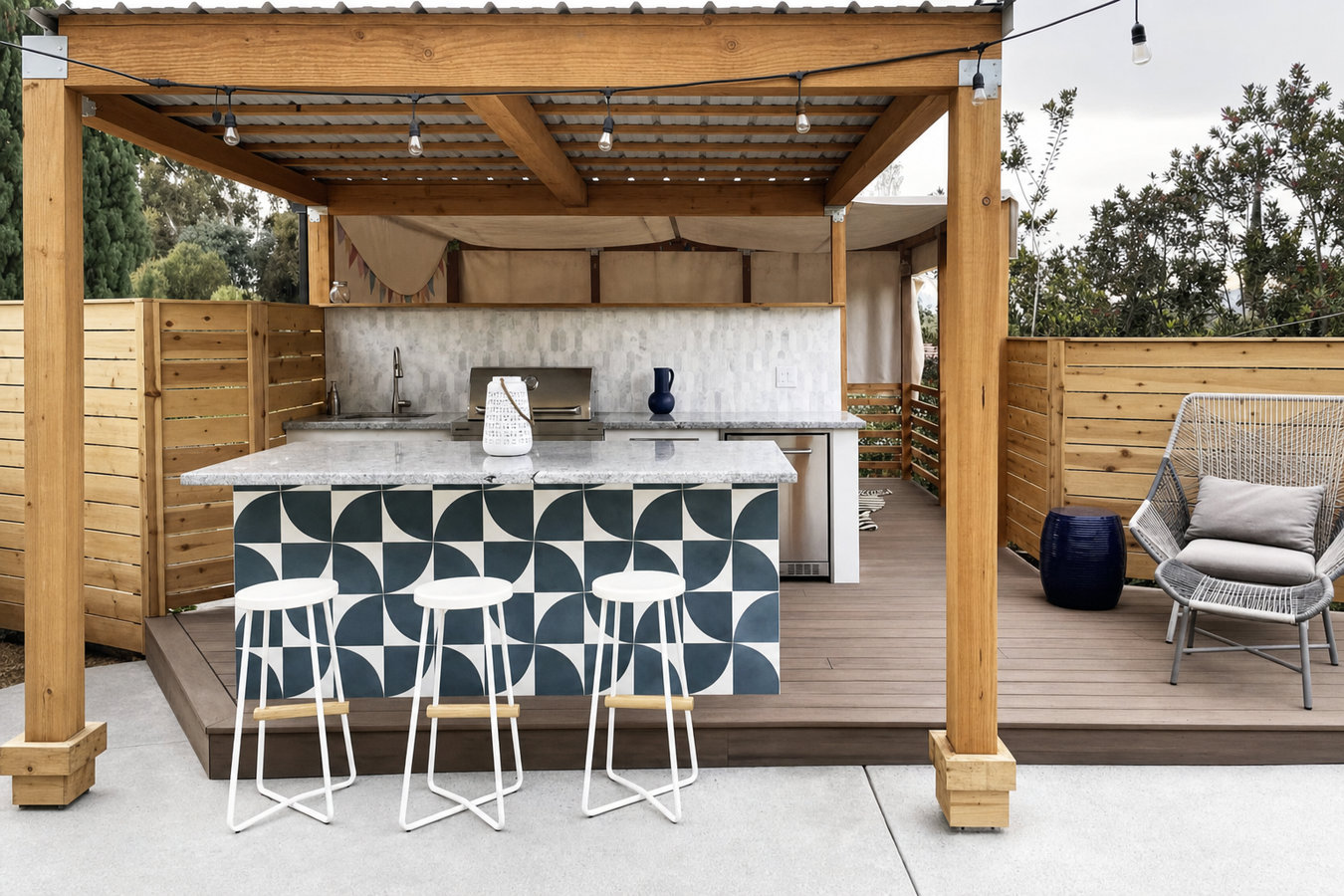
A portable grill on a cracked slab is not an outdoor kitchen. We build the real thing - a deck with a built-in grill station, countertops, and a structure that holds up in San Jacinto's climate for years.
Outdoor kitchen decks in San Jacinto combine a raised or ground-level deck structure with a permanent built-in cooking area, most projects taking two to four weeks of construction once permits are approved, with the full timeline from contract signing to first meal running six to nine weeks depending on the Riverside County permit review queue and HOA requirements.
The typical starting point is a homeowner who has an existing concrete slab that is cracked or too small, or who has been dragging a portable grill around a patio for years and finally wants a permanent setup. An outdoor kitchen deck solves both problems at once - you get a properly built platform and a functional cooking station with countertop space on either side of the grill. If you want overhead coverage above your kitchen, adding a pergola above the deck is a natural pairing and something we can include in the same project scope.
In Southern California's climate, outdoor living spaces are used year-round rather than just in summer, which is part of why they deliver real value - both in day-to-day enjoyment and at resale. A permitted outdoor kitchen deck with the right materials for Inland Empire conditions is an investment that earns its place.
If your outdoor space sits unused from June through September because there is no real cooking setup and nowhere comfortable to sit, your yard is not working for you. A well-designed outdoor kitchen deck with overhead shade can make warm evenings genuinely enjoyable - the kind of space where you actually want to spend time.
If your current concrete patio has visible cracks or tilts toward the house instead of away from it, those are signs the slab has moved - something that happens regularly in San Jacinto's clay soils. A cracked surface is not a safe or attractive base for an outdoor kitchen. Building on proper footings solves the problem at the root.
If your current outdoor cooking setup is a portable grill on wheels that you drag out every time, you already know how inconvenient it is. There is nowhere to set things down, cleanup is a hassle, and the cart wobbles. A built-in grill station with counter space on each side changes the whole experience.
If you have a wood deck more than 15 years old with boards that feel soft, railings that wobble, or visible rot, that structure is telling you it is past its useful life. San Jacinto's intense UV exposure accelerates wood degradation, so replacing it with a new deck that incorporates an outdoor kitchen is often more cost-effective than repairing and then adding a kitchen later.
Every outdoor kitchen deck project starts with the platform - pressure-treated framing on properly dug concrete footings, with composite decking boards on the surface. Composite holds its color and shape better than wood in San Jacinto's sustained summer heat, which is why it is our default recommendation for the walking surface. The kitchen structure is built next: a frame for countertops, a grill station, and any built-in appliances you want - side burners, a refrigerator, a sink. Countertops are typically concrete, porcelain tile, or stone, all of which handle grill heat and direct sun without cracking. If you want overhead coverage above the cooking area, a pergola can be designed as part of the same project.
For homeowners who want more than one level, we can build a multi-level deck that separates the cooking and dining zones or steps down to a lower yard grade. Gas lines and electrical connections are run by licensed subcontractors and inspected by the county at the rough-in stage - before anything is covered up. We handle the Riverside County permit application from start to finish and prepare HOA submission packages for homeowners in planned communities.
Suits homeowners who want a permanent cooking setup without a long project timeline - a built-in grill with heat-resistant counter space on either side.
Suits homeowners who entertain regularly and want a refrigerator, side burners, sink, and storage - a complete cooking station that keeps you outside from start to cleanup.
Suits homeowners who want a low-maintenance walking surface that holds its appearance through San Jacinto's intense UV exposure and heat cycles.
Suits homeowners who want shade above the cooking area - paired with a pergola or patio cover to make the space usable even on the hottest afternoons.
Suits homeowners with an existing aging deck who want to replace it and incorporate a kitchen station in the new build rather than doing two separate projects.
San Jacinto sits in the inland valley at roughly 1,500 feet elevation, with summer temperatures that regularly exceed 105 degrees Fahrenheit and intense direct sun for most of the day. This matters for an outdoor kitchen deck because materials that perform well in a showroom or in a cooler coastal climate can fail quickly here. Standard wood decking fades and warps under sustained UV exposure at these temperatures. Countertop materials that are not heat-rated can crack from a combination of grill heat and solar gain. We spec composite decking surfaces and heat-resistant countertop materials specifically because of how demanding the local climate is, not because they are a generic upsell. Homeowners in Hemet and Perris deal with the same conditions, and our material recommendations are consistent across the region.
The clay-heavy soils common across the San Jacinto Valley floor expand in wet winters and shrink in dry summers. A deck built without footings designed for that movement will start to shift within a few years - posts lean, boards gap, counters crack. We dig footings to an appropriate depth for local soil conditions and use seismic connection hardware throughout, which is also a permit inspection requirement given San Jacinto's proximity to the San Jacinto Fault. The permit and inspection process in Riverside County is a real quality checkpoint, not just paperwork - an inspector confirms the structure at the footing stage and again at framing before anything is covered up. That independent verification protects your investment in a way that skipping permits simply does not. You can verify that any contractor you consider holds a current California license on the California Contractors State License Board website before you sign anything.
We start with a quick conversation about how you plan to use the space, then schedule a yard visit to measure, check where gas and electrical lines run, and look at grade. You receive a written estimate within a few days - no charge, no obligation. Expect a reply within 1 business day.
Before any digging starts, we submit the permit application to Riverside County Building and Safety. We handle the paperwork; you sign where required. If your neighborhood has an HOA, we provide the drawings and documentation needed for their design review. Review typically runs one to three weeks.
Work begins with digging and pouring the concrete footings, then framing goes up and the deck surface is installed. The county inspector checks the footings before the frame goes on. Most standard-sized decks are framed within a few days of the footings curing.
The kitchen structure, grill station, and countertops are built with the frame in place. Gas and electrical lines are run by licensed subcontractors and inspected before being covered. After finishing touches, the county does a final inspection, and we walk you through everything before we leave.
Free on-site estimate, written quote, no pressure. We reply within 1 business day.
(951) 574-0258We submit the permit application to Riverside County Building and Safety and manage the review process for you. Every project is inspected at the footing stage and at completion - that independent verification means you have documented proof the structure was built correctly, which matters when you sell.
We recommend composite decking surfaces and heat-rated countertop materials specifically because San Jacinto's sustained summer heat and UV intensity are hard on materials that perform fine in cooler climates. What you choose now determines how the space looks in five and ten years.
The seasonal expansion and contraction of clay soils across the valley floor can shift deck posts over time. We dig footings to the appropriate depth for local soil conditions and use seismic connection hardware as standard - because proximity to the San Jacinto Fault makes those connections a permit requirement, not an optional upgrade. The North American Deck and Railing Association publishes the deck construction standards we build to.
We provide a written contract that spells out exactly what is included before any work starts. Any change - however small - is discussed and approved by you before it affects the cost. You stay in control of your budget from first conversation to final walkthrough.
Every outdoor kitchen deck we build starts with a permitted footing and ends with a county inspection - two steps that protect your investment whether you are planning to enjoy the space for decades or sell in a few years.
Separate cooking, dining, and lounging zones across two or more deck levels - a natural extension when your yard has grade changes or you entertain larger groups.
Learn MoreAdd a pergola above your outdoor kitchen deck for overhead shade and a defined sense of space that makes warm evenings genuinely comfortable.
Learn MoreBuild slots fill fast heading into summer - call today or request a free on-site estimate to lock in your project before the schedule closes.